


Expenzo
Turning a confusing finance dashboard into one users actually trust.
Project Overview
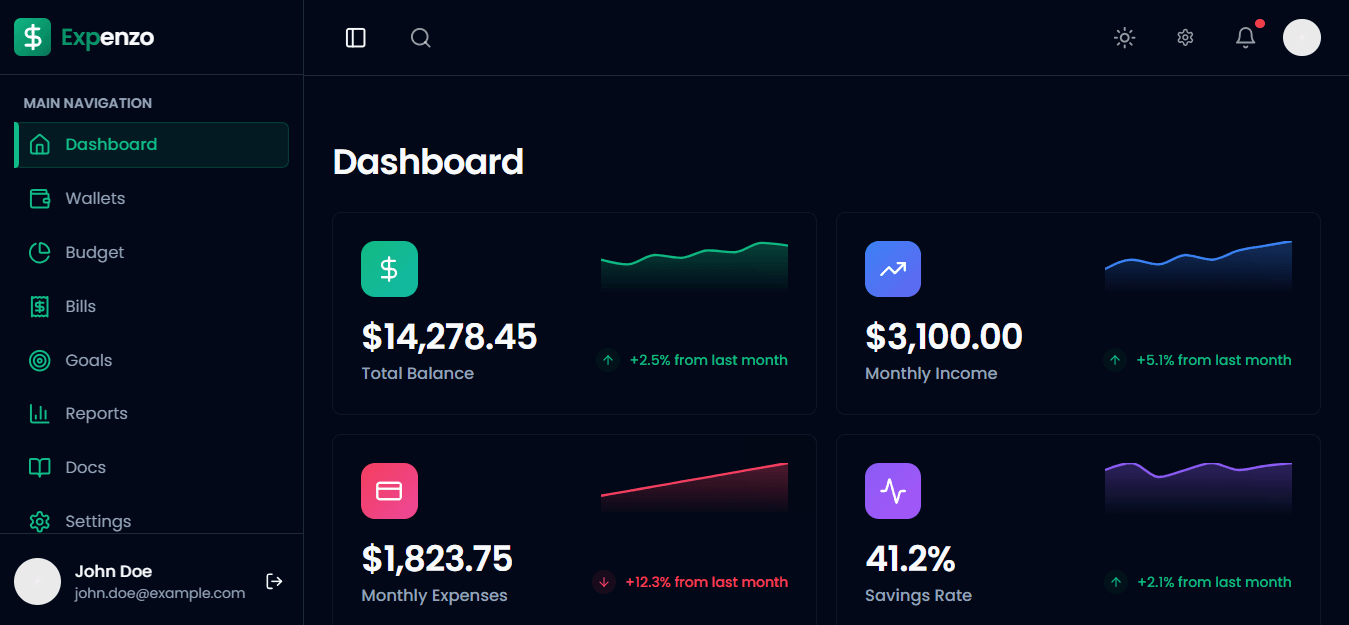
Expenzo came to us with a simple but very common problem: their personal finance product looked fine on paper, but the actual dashboard people used every day felt clunky, slow, and confusing. Users were dropping off before they even finished setting up their accounts. Our job was to rebuild the entire admin and user dashboard experience using MERN Stack Web Development, and do it in a way that felt fast, clean, and trustworthy — because when you're dealing with someone's money, trust isn't optional.
About the Client
Expenzo is a personal finance platform built for everyday users who want a clear picture of their spending, savings, and budgets without needing an accounting degree to understand it. Their target audience isn't finance professionals — it's regular people trying to figure out where their paycheck goes each month. That meant the product had to be simple on the surface, even though a lot was happening underneath: transaction categorization, budget tracking, spending trends, and account summaries all had to update in real time.
Challenges Faced
The dashboard took too long to load, especially for users with several months of transaction history.
The UI wasn't consistent — different sections of the app looked like they were built by different teams.
Adding a new report or chart meant touching multiple parts of the codebase, which slowed down every release.
There was no real separation between the admin side and the user side, so permissions and data access were messy.
Mobile users, who made up almost half their traffic, had a noticeably worse experience than desktop users.
Our MERN Stack Solution
We recommended a full rebuild using MERN Stack Web Development — MongoDB, Express.js, React.js, and Node.js — because it gave us the flexibility to design a fast, component-based frontend while keeping the backend lightweight and easy to scale. React let us build reusable dashboard widgets that could be reused across the admin and user views, Node.js handled real-time data processing efficiently, and MongoDB's flexible schema was a natural fit for the varied transaction data Expenzo was dealing with.
Development Process
Planning
We started with two weeks of discovery, going through Expenzo's existing analytics to see exactly where users were getting stuck. We mapped out every screen in the current dashboard and ranked features by how often they were used versus how much maintenance pain they caused.
UI/UX Design
Our design team rebuilt the dashboard around a simple idea: show people what matters most, first. We redesigned the home screen so spending summaries and budget alerts appeared immediately, without scrolling, and standardized the design system across every screen.
Frontend Development (React.js)
Using React.js, we broke the dashboard into small, reusable components. Charts, transaction lists, and budget cards were built once and reused across admin and user dashboards, cutting development time on later features by nearly half.
Backend Development (Node.js & Express.js)
On the backend, we used Node.js and Express.js to build a clean set of APIs that separated admin functions from regular user functions, fixing the permissions mess Expenzo had before, plus caching for frequently requested data like monthly summaries.
Database (MongoDB)
MongoDB gave us the flexibility to store different types of financial data — bank transactions, manual entries, recurring bills — without forcing everything into a rigid table structure. We designed indexes specifically around how users searched and filtered their data.
Testing & Deployment
We ran the new dashboard through staged testing with a small group of real Expenzo users before rolling it out fully, then deployed in phases with rollback options ready at every stage.
Key Features Delivered
A redesigned dashboard homepage with real-time spending summaries
Interactive charts for budgets, categories, and monthly trends
A dedicated admin panel with proper role-based access control
Mobile-optimized layouts for every major screen
Faster search and filtering across transaction history
Automated monthly report generation
Results & Business Impact
After launch, Expenzo saw dashboard load times drop from an average of just under 5 seconds to under 1.5 seconds. Manual reporting work for their internal team dropped by roughly 70%, since most reports that used to require spreadsheet exports were now available directly in the admin panel. User drop-off during onboarding fell noticeably, and mobile session length increased. Support tickets related to slow dashboards or lost transactions nearly disappeared within the first month.
Key Takeaways
A finance product doesn't need to look complicated to handle complicated data — good structure underneath means a simple experience on top. Choosing the right stack matters less than how you use it; MERN Stack Web Development gave us the tools, but the real value came from designing components and APIs around how Expenzo's users actually behaved. Involving real users during testing, not just internal QA, caught problems that would have otherwise shipped straight to production.
Conclusion
Rebuilding Expenzo wasn't about chasing the latest technology trend — it was about giving real users a finance tool that respected their time and their trust. Through careful planning, a component-driven frontend, and a backend built to scale, Global Digital Care helped Expenzo turn a frustrating product into one people actually enjoy using.
Ready to build your own success story?
If your business needs a fast, scalable web application, Global Digital Care can help with expert MERN Stack Web Development from planning through launch.
Talk to Global Digital Care